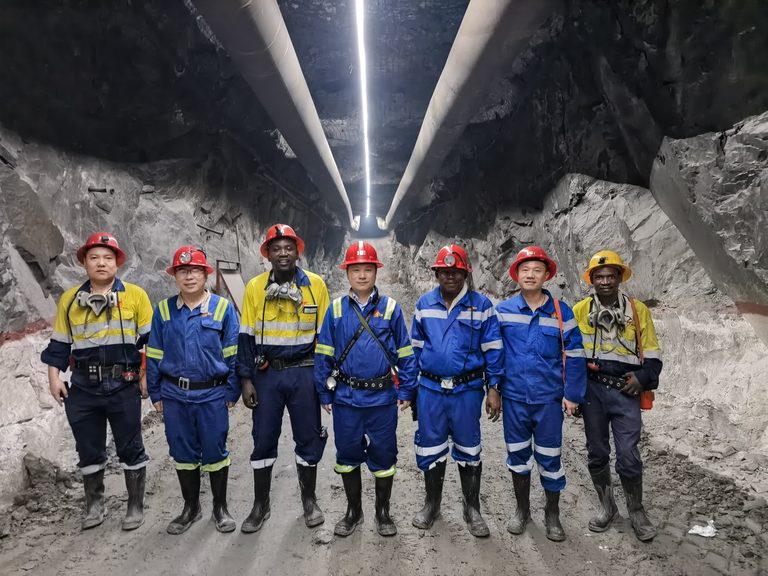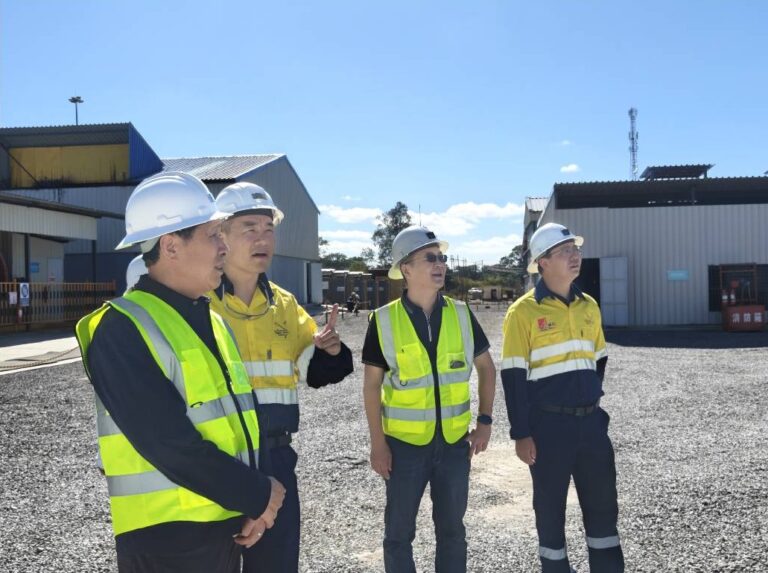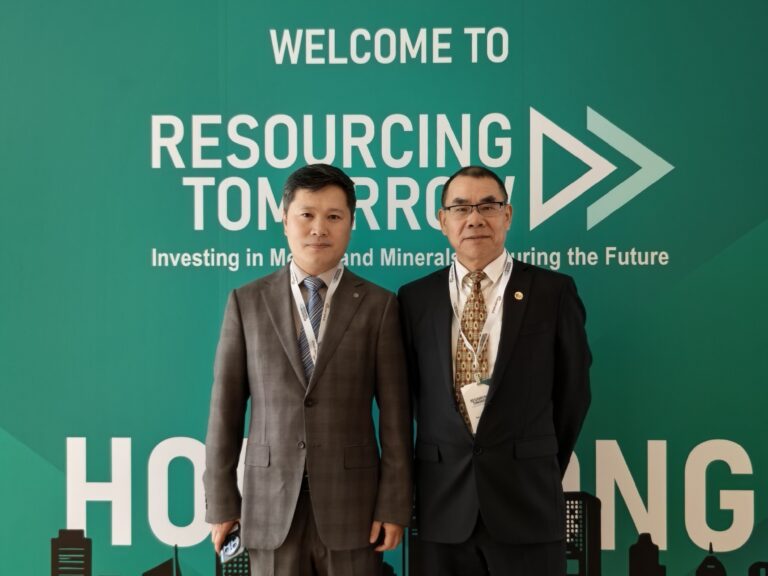
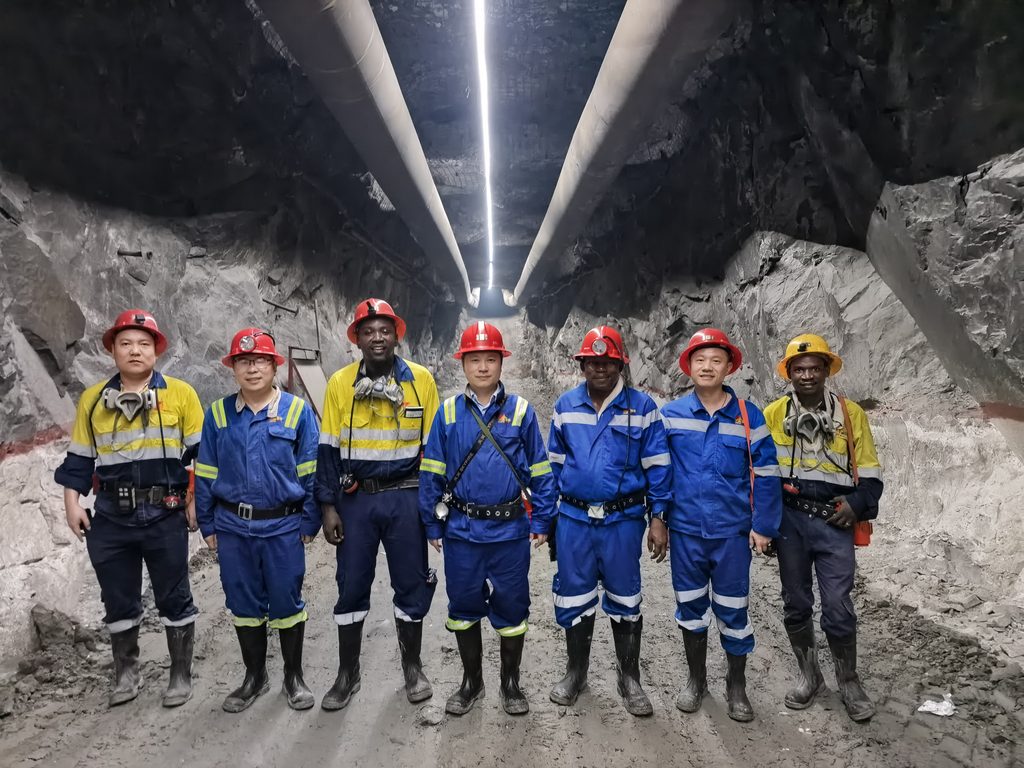
From August 9 to September 3, Chairman Wang Qinghai paid visits to JCHX projects in Zambia, DRC and Botswana to deliver work instructions and extend greetings to the project staff. He emphasized that the project implementation should be conducted based on “Mining Management 4.0” and by fully enhancing the project management and improving project quality, to lay a solid foundation for the implementation of the 6th five-year development strategy.
At Lonshi Copper Mine, Chairman Wang inspected the works at UG stopes, drainage system, surface maintenance workshop for trackless fleet, east zone shaft and tailings dam. While visiting the processing plant, the smelter and the training school, he listened to the report on production processes running, product quality control and local staff training, and requested the project to continuously improve the production techniques, advance the whole-process automation application, and broad the scope of training.
At the meeting, he pointed out that the standardized construction shall be fully conducted and SOPs covering all procedures shall be systematically prepared. Balancing current operations and long-term development, the project shall attach importance to the application of AI tools, stay committed to technology-enabled operations, integrate proven management experience into digital systems, and improve operational efficiency systematically. With regard to foreign affairs compliance, he called for continued in-depth study of local laws and regulations to build a solid line of defense for compliance management from the source.
Furthermore, he requested the project to strengthen the development of the industrial workforce, carry out regular skills training and practical drills, build platforms for talent development, and foster a professional talent pool. The project should further embed the philosophy of “maintenance over repair” for equipment, to improve the full-lifecycle equipment maintenance system, refine daily inspection and maintenance procedures, and ensure continuous and stable production. It should also enhance proactive material support to make sure that materials supply is in line with production schedules, sort out material requirements in advance, and optimize end-to-end management of procurement, stockpiling and allocation.
At Dikulushi Copper Mine, Chairman Wang inspected each process flow of the processing plant, and enquired about the processing targets, performance of various indicators, as well as progress in copper concentrate sales.
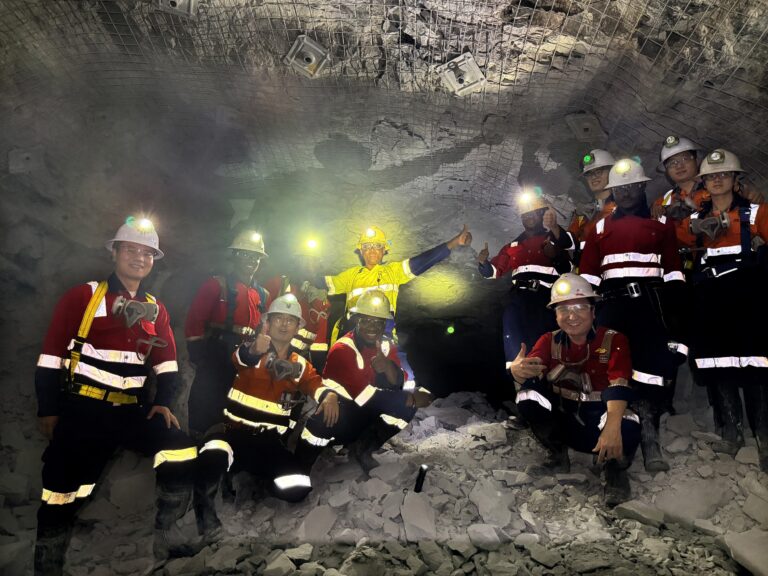
After listening to the report on underground production and engineering layout, he visited the extension working face of the main decline, mining site in the 8-1 primary mining level, the 7-1 pump station, 6-7 production exploration area, and steel arch installation and forepoling site at the 8-1 west primary mining level. He asked about ore grade and exploration progress, exchanged views with site personnel on workforce development, maintenance-over-repair equipment philosophy, unit consumption per machine, systematic dewatering, and safety control for remnant ore recovery in closed panels, and put forward constructive suggestions. Subsequently, he proceeded to the open pit, backfill plant and tailings pond on the surface, provided specific guidance on cement stockpiling, interception and drainage in the open pit, and operation of the newly raised dam of the tailings pond, and enquired in detail about the construction progress of the upcoming photovoltaic project.
After listening to the briefing on mine geological work and remaining mineral resources, Chairman Wang called for continued efforts to strengthen exploration in deeper zone and hanging-wall to increase reserves. He emphasized further enhancing comprehensive research and adopting AI prospecting technologies, to deliver exploration breakthroughs and meet the target of incremental mineral resources.
At Lubambe Copper Mine, Chairman Wang listened to the report on UG production organization and site safety management.
He put forward six requirements for the next phase of work: (1) deepen the development of the Mining Management 4.0. Taking systematic rollout as the core, focus on major difficulties and bottlenecks of core systems to achieve coordinated delivery of all tasks. (2) steadily advance international development. Strengthen the development of the international talent system and build a multidisciplinary global team that is technically competent, linguistically proficient, management-capable and well-versed in relevant rules. Benchmark against internationally advanced standards, operational frameworks and management models to continuously enhance international operational capabilities. (3) systematically conduct training and development for the industrial workforce. Improve standardized and regular training mechanisms, leverage the core role of local employees, and establish a training base for industrial workers. (4) consolidate on-site information management and unblock the data link between the site and headquarters. (5) standardize comprehensive budgeting and accounting management to provide accurate financial data support for the company’s operational decision-making. (6) refine task breakdown and coordinated implementation. Clarify responsibilities, strengthen cross-departmental and cross-disciplinary collaboration, and ensure efficient closed-loop management of all work.
In the DRC, Chairman Wang also inspected projects that JCHX provides contract mine construction and mining services to, including Kinsenda project, Kamoa project, Musonoi project and Kipushi project. At Kinsenda, he obtained detailed information about UG civilized production and safety control measures. At Kamoa, he went deep into various mining blocks within the Kakula Mine, focusing on inspecting stope continuity, roof safety, support, ventilation, water prevention and control, etc. At Musonoi, he mainly learned about stope configuration, longhole stoping parameters and equipment maintenance, etc. At Kipushi, he put forward requirements for production organization, equipment support, safety management, and competency improvement of local talent.
Chairman Wang also visited Kinsanfu Mine, owned by CMOC, and an in-depth discussion was held over mine operation and supply chain coordination.
At Chambishi, Chairman Wang inspected key operational sites including old and new panels of the Western Orebody and maintenance chambers, and provided guidance on the implementation of the safety management system, standardization development, equipment maintenance-over-repair management, engineering quality control, and ore grade management. He required the project to firmly consolidate safety defenses and fully implement full-chain safety responsibilities covering both Chinese and Zambian management teams as well as frontline operators, strictly enforcing the principle of “no safety, no production”. It shall further upgrade standardized safe and civilized mining operations, build model work areas, and promote comprehensive implementation of standardized construction through benchmark demonstration. He emphasized the need to continuously optimize full-process management, control for high-risk operations such as blasting, roadway support, roof management and equipment operation, accelerate information-based empowerment, and improve the quality and efficiency of daily management through digital transformation.
At Mopani, he required strict alignment with industrial standards and the Employer’s requirements, rigorous control over raw material quality, construction techniques and process acceptance, and continuous optimization of construction plans and technical procedures. He stressed the rational allocation of manpower, equipment and materials to efficiently tackle construction difficulties. He urged strengthened collaborative management between Chinese and local employees to improve overall professional competency and emergency response capabilities. The project shall fully guarantee logistical support for overseas staff, continuously optimize production and living conditions, consolidate team cohesion for tough tasks, and foster a pragmatic and proactive working atmosphere.
At Luanshya, Chairman Wang requested the project to stay committed to the principle of “safety prioritized, prevention first and comprehensive governance”, to further ascertain the responsibilities of all levels and strengthen the risk identification and control ability.
At Khoemacau, Chairman Wang headed to the dispatch room, control room for remote-controlled LHD, facial recognition & fingerprint alcohol screening all-in-one system and shaft bank, etc., and closely inspected equipment operation, standardized work practices and intelligent management & control.
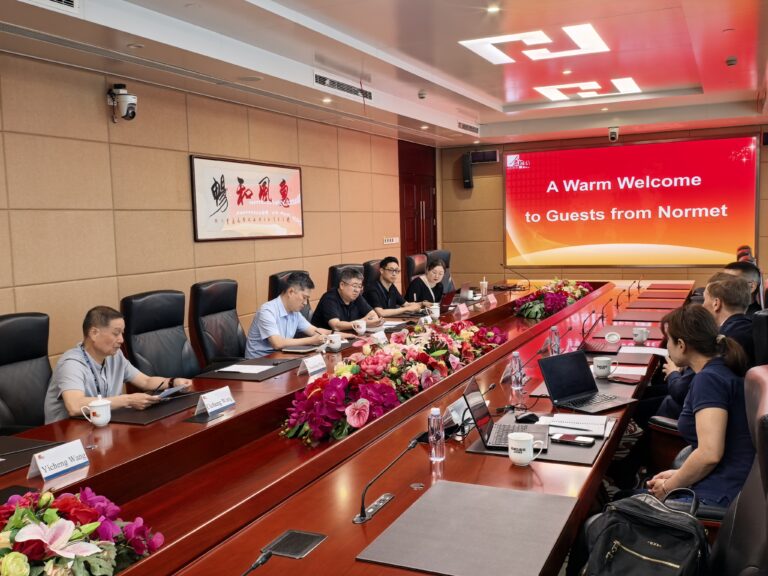
At the meeting with the project staff, Chairman Wang listened to suggestions raised by employees from the material, equipment, production, technology, safety, human resources, finance and operation departments regarding production organization, equipment operation and maintenance, localization management and cross-cultural integration, and responded to each point individually. He stated that JCHX will make every effort to provide full-dimensional support for frontline projects. Meanwhile, he required the project to maintain close coordination and interaction with the headquarters, accurately identify root causes of problems, resolve development bottlenecks with systematic thinking, strictly enforce quality standards, and strive to build a benchmark overseas project.